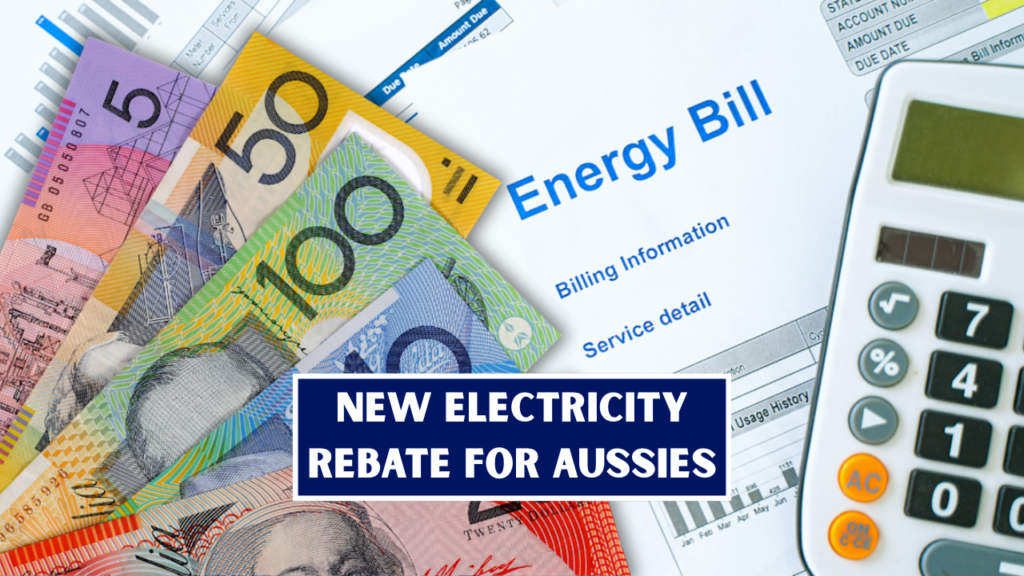
Australia has confirmed that households that meet certain criteria will get a new $1,300 energy bill rebate. This will help a lot with the rising cost of living. People all over the country can now apply for this government-backed help to help pay for their gas and electricity bills. The program’s goal is to help families with low or moderate incomes, retirees, and people who get government benefits. It’s important to know the eligibility requirements, how to apply, and when the money will be available in order to get the most out of the rebate and get the money quickly.
What You Need to Do to Get the $1,300 Energy Bill Rebate
To get the energy bill rebate, you must meet certain income and residency requirements. Households that are usually eligible are those with low-income workers, retirees, or people who get Centrelink benefits. Applicants must show proof of residency and utility accounts to back up their claim. The amount of the rebate is different for single and family households, and it depends on the size of the household. Before applying, people should check to see if they are eligible to avoid delays or having their claims denied. This way, they can get the rebate without any problems.
How to Get the Rebate on Your Energy Bill
You can easily get the rebate online from government websites or the websites of your utility company. Before applying, people should get their ID, utility bills, and payment information. You will need to give information about your home and how much energy you use in the online application. They get confirmation emails and reference numbers after they send in their applications. These help them keep track of how far they’ve come. Some states may automatically give credit to customers who are eligible, while others may require them to ask for it directly. Double-checking that all the information is correct and complete speeds up the approval process and helps avoid mistakes.
 Goodbye to Small Super Contributions: New $7,500 Contribution Cap Enforced From 20 February 2026
Payment Plan and Help Information
Within a few weeks of getting approval, the rebate payments should start. People usually put the money directly into their bank accounts or use it to pay their utility bills. Families can expect to get a one-time payment of $1,300, but the date will depend on the energy company and the state. People who get confirmation notices and payment dates can plan their household budgets better. This rebate gives families a real financial cushion that will help them deal with rising energy costs in 2026.
Important Points and a Summary
The $1,300 energy bill rebate is a very important way to help families in Australia who are having trouble with their money. To get help on time, eligible residents need to make sure they meet the requirements, gather the right documents, and send in the right applications. It’s easier to get money when you know how to file a claim, when you can expect payment, and how much money you can get for your household. Families can get the most out of this program by planning ahead. It will help them deal with rising energy costs and keep their budgets stable until 2026.
| Category | Details |
|---|---|
| Rebate Amount | $1,300 Per Eligible Household |
| Eligible Applicants | Low-Income Individuals, Retirees, and Government Benefit Recipients |
| Application Method | Apply Online via Portal or Through Your Utility Provider |
| Required Documentation | Utility Bills, Identification, and Payment Details |
| Payment Method | Direct Bank Deposit or Credit Toward Utility Bill |
Questions That People Always Ask
1. Who is eligible for the $1,300 energy rebate?
People who can get help are low-income workers, retirees, and people who get money from Centrelink.

2. How do I get the energy credit?
You can fill out an application online on the websites of the government or your utility company.
3. When will the money be returned?
Payments are made within a few weeks of approval, either directly or as credits on bills.
4. What paperwork do you need to get the money back?
To apply, people need to show proof of where they live, like utility bills or bank statements.